


Habitat requirements of model species
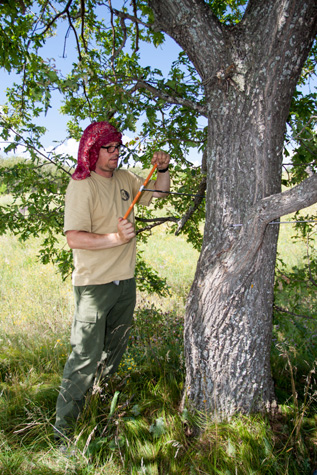
Throughout the past intensive forest management or in modern days, lack of proper management has led to sharp decline in abundance of many protected species that are confined to small sites with very localized distribution. Despite their vulnerability, their biology and requirements are not fully known. Often, their cryptic life and rarity can be a major offset in the identification of main habitat features. Once assessed, habitat preferences and indicators should lead to developing decision rules for monitoring and habitat management of these species. We are interested in rare habitats, such as veteran trees and pasture woodlands that are associated with them and host a diverse array of other species. Our studies show the emphasis should be put on more traditional management practices, such as coppicing and pollarding that promote restoration of wood pastures and open forest canopy to support veteran trees formation, as an abandonment of pastures has led to the disappearance of large, old trees.
Members involved
Lukáš Čížek, Pavel Šebek, Michaela Helclová, Lukáš Drag, Dmitry Shovkun
Related publications
- Goßmann A., Ambrožová L., Čížek L., Drag L., Georgiev K., Neudam L., Perlík M., Seidel D., Thorn S. (2023) Habitat openness and predator abundance determine predation risk of warningly colored longhorn beetles (Cerambycidae) in temperate forest. Journal of Insect Science 23: 1–7.
- Cizek L., Hauck D., Miklin J., Platek M., Kocarek P., Olsovsky T., Sebek P. (2021) Relict of primeval forests in an intensively farmed landscape: what affects the survival of the hermit beetle (Osmoderma barnabita) (Coleoptera: Scarabaeidae) in pollard willows? Journal of Insect Conservation 25: 407–415.
- Castro A., Drag L., Cizek L., Fernández J. (2019) Rosalia alpina adults (Linnaeus, 1758) (Insecta, Coleoptera) avoid direct sunlight Animal Biodiversity and Conservation 42.1: 59-63.
- Platek M., Sebek P., Hauck D., Cizek L. (2019) When is a tree suitable for a veteran tree specialist? Variability in the habitat requirements of the great capricorn beetle (Cerambyx cerdo) (Coleoptera: Cerambycidae) European Journal of Entomology 116: 64-74.
- Volf M., Holec M., Holcová D., Jaroš P., Hejda R., Drag L., Blízek J., Šebek P., Čížek L. (2018) Microhabitat mosaics are key to the survival of an endangered ground beetle (Carabus nitens) in its post-industrial refugia. Journal of Insect Conservation 22: 321–328.
- Kostanjsek F., Sebek P., Baranova B., Seric Jelaska L., Cizek L. (2018) Size matters! Habitat preferences of the wrinkled bark beetle, Rhysodes sulcatus, the relict of European primeval forests. Insect Conservation and Diversity 11: 545–553.
- Gouix N., Šebek P., Valladares L., Brustel H., Brin A. (2015) Habitat requirements of the violet click beetle (Limoniscus violaceus), an endangered umbrella species of basal hollow trees. Insect Conservation and Diversity 8: 418-427.
- Pokluda P., Hauck D., Čížek L. (2012) Importance of marginal habitats for grassland diversity: fallows and overgrown tall-grass steppe as key habitats of endangered ground-beetle Carabus hungaricus. Insect Conservation and Diversity 5: 27-36.
- Albert J., Plátek M., Čížek L. (2012) Vertical stratification and microhabitat selection by the Great Capricorn Beetle (Cerambyx cerdo) (Coleoptera: Cerambycidae) in open-grown, veteran oaks. European Journal of Entomology 109: 553–559.
- Čížek L., Schlaghamerský J., Borucky J., Hauck D., Helešic J. (2009) Range expansion of an endangered beetle: Alpine Longhorn Rosalia alpina (Coleoptera: Cerambycidae) spreads to the lowlands of Central Europe. Entomologica Fennica 20: 200-206.